
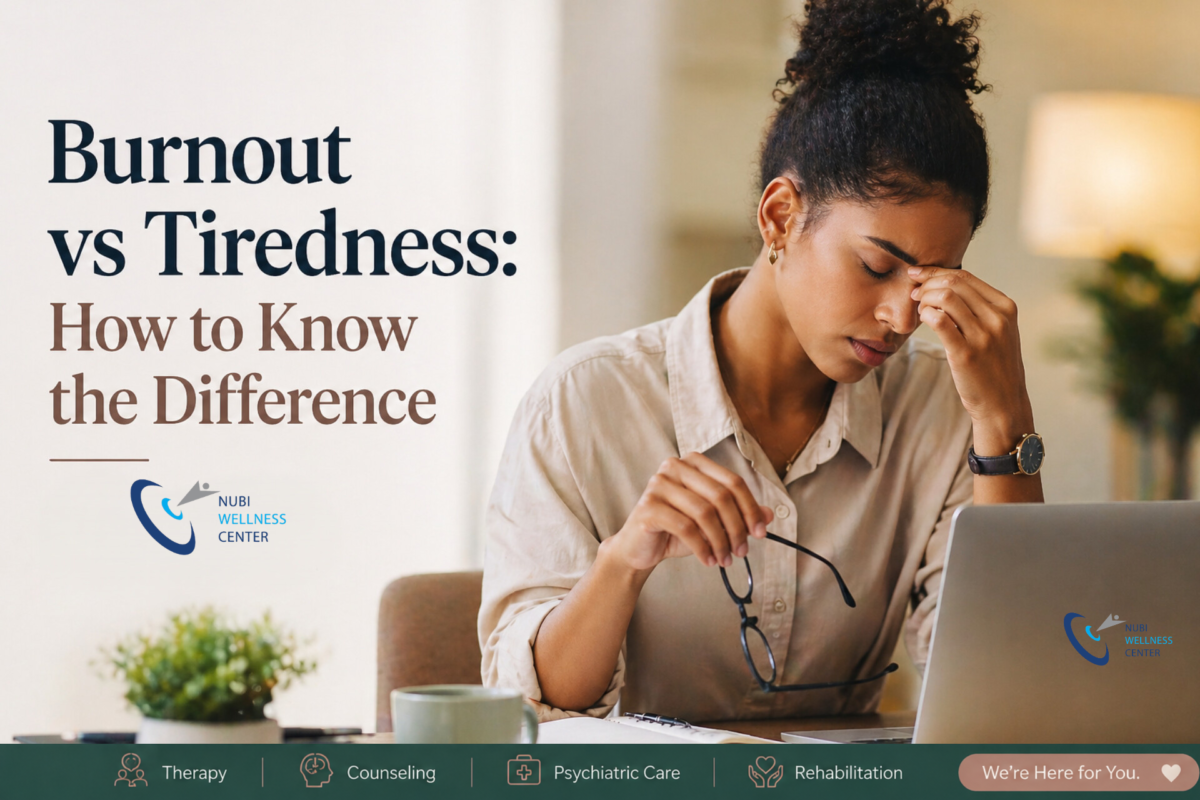
You Thought You Just Needed Sleep. But the Sleep Is Not Helping.
You have been taking it one day at a time. Getting through meetings, meeting deadlines, showing up for everyone who needs you. And every night you tell yourself: if I just get a good night of rest, I will feel better tomorrow.
But tomorrow comes. And the exhaustion is still there. Not just in your body, but somewhere deeper. A kind of emptiness that sleep does not seem to touch.
If this sounds familiar, you may not just be tired. You may be experiencing burnout.
Burnout and tiredness are two very different things. And knowing the difference matters, because treating burnout like ordinary tiredness is one of the most common mistakes people make, and it is one that can quietly cost you your health, your relationships, and your sense of self.
This blog post will help you understand what each one actually is, how to tell them apart, and what to do when rest is simply not enough.
What Is Normal Tiredness?
Tiredness, or fatigue, is a natural physical response to exertion. When you have had a long day, a demanding week, a sleepless night, or an intense workout, your body signals that it needs rest. That is healthy and expected.
Normal tiredness has some straightforward characteristics:
- It has a clear cause, such as physical activity, lack of sleep, or a particularly busy period at work.
- It is temporary. Rest, sleep, or a relaxing weekend restores your energy.
- It is physical more than emotional. Your body is tired, but your mind and motivation are generally intact.
- It resolves. After adequate rest, you return to feeling like yourself.
Normal tiredness is not a problem to be solved. It is your body communicating what it needs. A good night of sleep, a quiet weekend, or a short break is usually all it takes.
What Is Burnout?
Burnout is a state of chronic physical, emotional, and mental exhaustion caused by prolonged and unrelenting stress, most commonly in work or care giving environments. It was officially recognized by the World Health Organization in 2019 as an occupational phenomenon, and it is far more serious and complex than simply being tired.
Burnout does not happen overnight. It builds gradually, often in people who are highly driven, deeply committed, and used to pushing through difficulty. It is common among professionals, entrepreneurs, caregivers, teachers, healthcare workers, and anyone who has been giving more than they have been receiving for a long time.
Unlike tiredness, burnout does not respond to rest alone. You can take a full week off, sleep ten hours a night, and return to work feeling exactly as depleted as when you left. That is one of its most disorienting qualities.
The World Health Organization defines burnout across three dimensions:
- Feelings of energy depletion or exhaustion
- Increased mental distance from one’s job, or feelings of negativism or cynicism related to work
- Reduced professional efficacy, meaning you feel less capable and less effective at what you do
But burnout does not stay confined to work. Over time, it spills into every area of life, affecting relationships, physical health, emotional wellbeing, and your sense of identity.
Burnout vs Tiredness: Side-by-Side Comparison
Here is a clear breakdown of the key differences between normal tiredness and burnout:
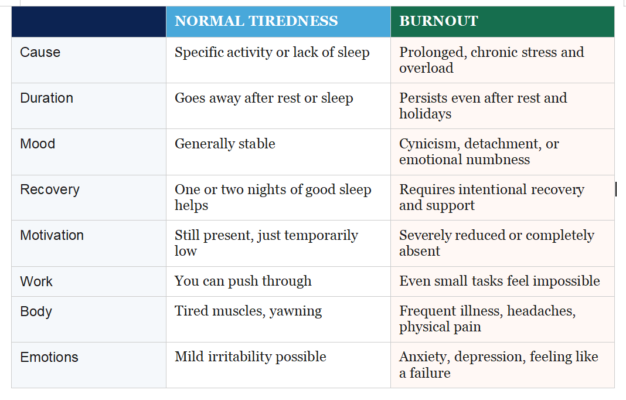
The most important signal to watch for is this: if rest is no longer working, something more than tiredness is going on.
The Five Stages of Burnout
Burnout rarely arrives all at once. It typically progresses through recognizable stages and understanding them can help you catch it early.
Stage 1: The Honeymoon Phase
You take on a new role or project with high energy, enthusiasm, and commitment. You are motivated, productive, and willing to go above and beyond. This stage feels good, but it can quietly plant the seeds of burnout when the intensity is sustained without adequate recovery.
Stage 2: Onset of Stress
The demands begin to outpace your resources. You start noticing that some days are harder than others. Headaches, fatigue, and occasional anxiety begin to appear. You may start neglecting personal needs to keep up with work obligations.
Stage 3: Chronic Stress
Stress is now a constant companion. Procrastination increases. Cynicism creeps in. You feel chronically behind, perpetually tired, and increasingly resentful. Social withdrawal begins and physical symptoms become more frequent.
Stage 4: Burnout
This is full burnout. Exhaustion is overwhelming and constant. You feel emotionally numb, detached, and empty. Simple tasks feel impossible. Self-doubt intensifies and hopelessness becomes familiar. At this stage, professional support is not optional, it is essential.
Stage 5: Habitual Burnout
If left unaddressed, burnout becomes embedded into daily life. Chronic mental and physical health problems, depression, and anxiety become persistent features. This stage requires sustained and comprehensive care to recover from.
Warning Signs of Burnout You Should Not Ignore
The following signs suggest you may be experiencing burnout rather than ordinary tiredness. Take them seriously if you recognize more than a few:
- You wake up exhausted even after sleeping through the night
- You feel detached, disconnected, or emotionally numb at work
- Tasks that used to come easily now feel overwhelming or pointless
- You have become cynical or resentful about your job or the people you work with
- You are frequently ill, getting colds or infections more than usual
- You have persistent headaches, muscle tension, or unexplained physical pain
- You feel like nothing you do is ever good enough
- You have stopped finding joy or meaning in work you once cared about
- You are snapping at people you love over small things
- You feel a growing sense of dread at the start of each work week
- You are using food, alcohol, social media, or other substances to cope
- You feel like you are going through the motions of your life rather than actually living it
If several of these resonate with you, please do not dismiss what you are feeling as weakness or laziness. Burnout is a real and serious condition, and it is telling you that something needs to change.
Who Is Most at Risk of Burnout?
While burnout can affect anyone, certain factors increase vulnerability:
- Working in high-demand, high-pressure environments with little control over outcomes
- Taking on multiple roles simultaneously, especially without sufficient support
- Being a people-pleaser or having difficulty saying no
- Lacking clear boundaries between work and personal life, which is especially common in remote work
- Being a primary caregiver for children, elderly parents, or a sick family member
- Working in emotionally demanding sectors such as healthcare, education, social work, or mental health
- Experiencing workplace conflict, lack of recognition, or poor management
- Having a personal history of anxiety, perfectionism, or overachievement
In Nigeria, burnout is increasingly common among young professionals navigating high workloads, financial pressure, long commutes, and the cultural expectation to always appear strong and capable. The pressure to succeed, provide for family, and maintain appearances can make it extremely difficult to acknowledge when you are not okay.
What to Do When Rest Is Not Enough: Recovering from Burnout
Recovery from burnout is real and possible, but it requires more than a holiday or a weekend off. Here is what genuine burnout recovery looks like:
1. Acknowledge What Is Happening
The first and most important step is to stop minimizing what you are experiencing. Naming burnout honestly is not weakness. It is the beginning of healing.
2. Address the Source
If possible, identify the specific conditions driving your burnout. Is it an unsustainable workload? A toxic work environment? Lack of support? Clear boundaries not being respected? Understanding the root cause helps you make changes that actually address the problem rather than just managing symptoms.
3. Rest Intentionally
This means more than sleep. It means genuine recovery: time completely away from work, activities that replenish rather than distract you, time in nature, creative outlets, prayer, meaningful connection, and doing things that make you feel human again.
4. Set Boundaries and Mean Them
Burnout rarely improves without changes to the conditions that caused it. This may require difficult conversations about workload, working hours, or responsibilities. It may mean saying no to things you previously said yes to automatically.
5. Seek Professional Support
Burnout, especially in its later stages, is not something to navigate alone. A mental health professional can help you understand what drove you to this point, develop healthier coping strategies, address any underlying anxiety or depression that has developed, and rebuild a life that is sustainable and meaningful.
Therapy is not reserved for crisis. Many people seek support specifically to prevent themselves from reaching crisis in the first place.
6. Be Patient with the Process
Recovering from burnout takes time. Weeks or months, not days. There will be setbacks. Progress will not always be linear. But with the right support and real changes, people do recover fully and go on to build healthier, more sustainable lives.
Preventing Burnout Before It Starts
The best time to address burnout is before it arrives. These practices can protect your mental health at work over the long term:
- Schedule regular rest as seriously as you schedule work commitments
- Build genuine recovery time into each week, not just annual leave
- Communicate your limits clearly and early, before you are overwhelmed
- Invest in relationships and activities outside of work that bring you joy
- Check in with yourself regularly and ask honestly: how am I actually doing?
- Seek support early, before burnout becomes entrenched
You Were Not Built to Run on Empty
If you have been telling yourself that you just need to push through, just survive this season, just get to the weekend, it may be time to stop and listen to what your body and mind are actually telling you.
Tiredness passes. Burnout stays until you address it. And the longer it goes unaddressed, the heavier the cost on your health, your relationships, and your sense of self.
At Nubi Wellness Center, we work with individuals navigating burnout, work stress, emotional exhaustion, and the mental health challenges that often accompany them. Our team of experienced mental health professionals is here to provide the support, tools, and space you need to genuinely recover and build a life that sustains you.
You do not have to keep running on empty. Help is available. Recovery is possible. And you deserve both.

You Do Not Have to Carry It Alone
If this post resonated with you, our team at Nubi Wellness Center is here to walk with you through your healing journey. Reach out today, in confidence and without judgment.
Chat With Us on WhatsApp Visit Our Website09070990088 / 07054109566 • Every Story Matters. Every Healing Journey Counts.