
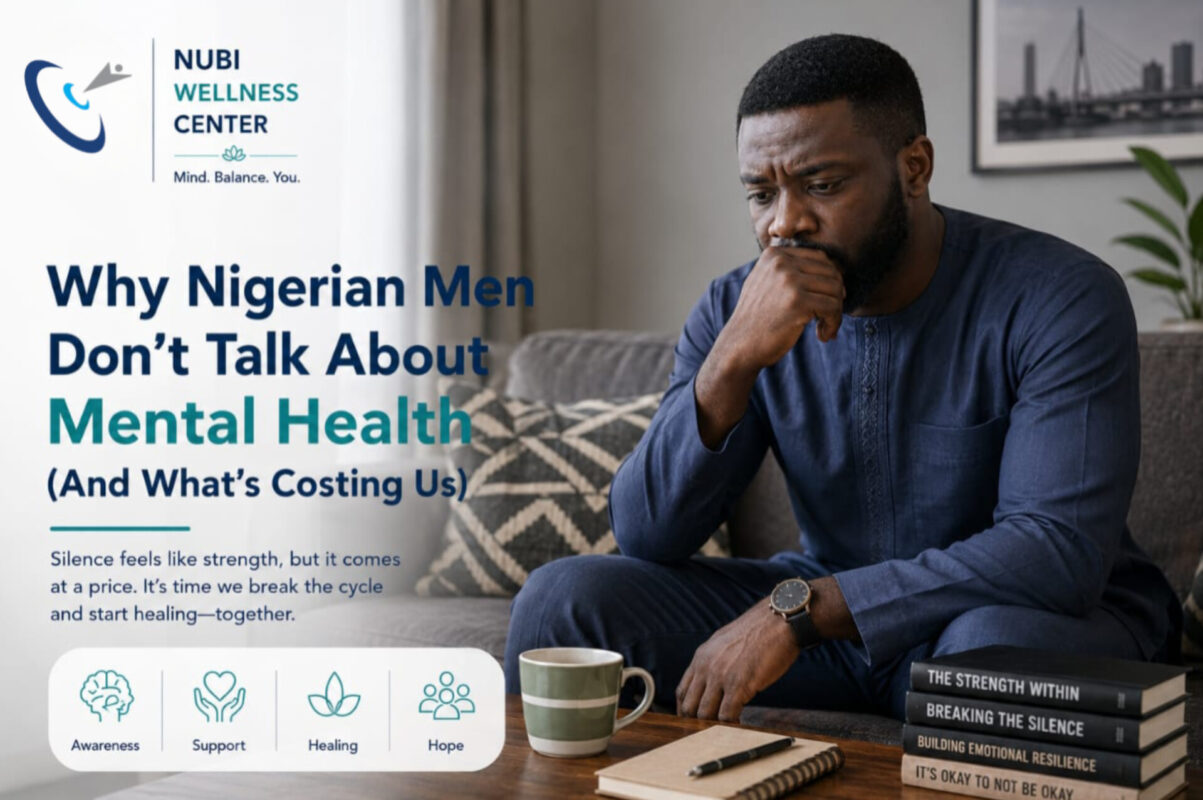
In Nigeria, a man who cries is called weak. A man who says “I’m not okay” is told to “man up.” A man who asks for help is quietly judged as someone who has lost his grip. So what does a Nigerian man do when the weight becomes unbearable? He smiles. He disappears into work. He drinks a little more than he should. He goes quiet in ways nobody notices until it is too late.
This is the reality of men’s mental health in Nigeria. And it is costing us far more than we are willing to admit. June is Men’s Mental Health Awareness Month, and at Nubi Wellness Center, a mental health clinic in Lagos, we believe it is time to change that.
Why Nigerian Men Avoid Talking About Mental Health
From childhood, Nigerian boys receive a very clear message: emotions are a liability. Tears are met with “why are you crying like a girl?” Vulnerability is punished with ridicule. Pain is something you swallow, not something you speak.
By the time that boy becomes a man, he has learned the lesson perfectly. He does not talk about his fears. He does not admit when he is overwhelmed. He carries every burden alone because that is what strength looks like in his world.
This is not weakness. This is what he was taught. And it is one of the most dangerous things happening in our communities right now.
Men’s Mental Health in Nigeria: The Statistics We Cannot Ignore
Mental health data in Nigeria is still limited, but what we do know is deeply concerning. The World Health Organization estimates that depression affects over 7 million Nigerians. Studies consistently show that men are significantly less likely to seek mental health treatment than women, even when experiencing the same level of distress.
Globally, men die by suicide at rates nearly three to four times higher than women. In Nigeria, where conversations about suicide remain taboo, accurate data is harder to access, but mental health professionals report seeing increasing numbers of men presenting in crisis, many of whom have been struggling silently for years.
Behind these numbers are fathers, brothers, husbands, sons, and friends. Real people suffering in silence because they were never given permission to do otherwise.
Barriers to Mental Health Care for Nigerian Men
Understanding why Nigerian men avoid mental health care and therapy is the first step to changing it. These are the most common barriers we see at Nubi Wellness Center, a psychiatric rehabilitation clinic in Lagos:
- The “Strong Man” Identity: Nigerian masculinity is built on the idea that a real man does not break. Admitting emotional struggle feels like a direct contradiction of that identity, so men suppress rather than address.
- Fear of Judgment: The social cost of being seen as “mad” or unstable in Nigerian society is significant. Men fear losing respect from family, colleagues, and their community if they seek help.
- Spiritual Misinterpretation: Many Nigerian men are told that mental health struggles are a spiritual problem, not a medical one. While faith is a powerful source of strength, it should never be used as a reason to avoid professional care.
- Lack of Awareness: Many men do not recognize what they are experiencing as a mental health condition. They may describe feeling “tired all the time,” “angry for no reason,” or “like they are just going through the motions” without knowing these can be symptoms of depression or anxiety.
- Financial Pressure: The Nigerian man is expected to be a provider. When economic stress is itself a source of mental strain, it also becomes a reason men feel they cannot “afford” to take a step back and prioritize their health.
Signs of Depression and Anxiety in Nigerian Men
Because men rarely name what they are feeling, depression and anxiety in Nigerian men often show up differently than in textbook descriptions. At Nubi Wellness Center, our mental health professionals in Lagos see patterns that many families quietly recognize:
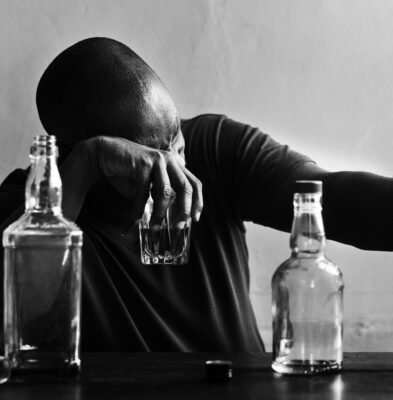
- Increased irritability, anger outbursts, or emotional withdrawal
- Turning to alcohol or substance use to cope
- Overworking or staying excessively busy to avoid feeling
- Physical symptoms like persistent fatigue, headaches, or body pain with no clear medical cause
- Pulling away from relationships and social activities
- Reckless behaviour or taking unnecessary risks
These are not character flaws. They are often the language of a man in pain who was never taught any other way to express it.
The Hidden Cost of Untreated Mental Health in Nigerian Men
The cost of untreated depression, anxiety, and mental illness in Nigerian men is not just personal. It ripples outward.
Families break apart under the weight of a father who has never processed his trauma. Children grow up watching a man who cannot communicate emotion and learn to do the same. Workplaces absorb the productivity loss of employees suffering through burnout and depression without support. Communities lose men who die too young, too quietly, too alone.
When a man heals, it is never just about him. It changes everything around him.
How to Support Men’s Mental Health in Nigeria: What Needs to Change
Change starts with conversation. Here is how we can begin to shift the culture around men’s mental health in Nigeria and make mental health treatment more accessible:
- Start talking at home. Fathers, talk to your sons about emotions. Normalize the language of mental health early.
- Check on the men in your life. “I’m fine” is not always fine. Go deeper. Ask twice.
- Separate faith from avoidance. God and therapy are not in conflict. Seeking professional help is an act of wisdom, not a lack of faith.
- Seek help early. You do not have to wait until you are in crisis. If something feels wrong, reaching out is always the right move.
A Message to Nigerian Men Seeking Mental Health Help
You have been carrying things you were never meant to carry alone.
The exhaustion you feel is real. The pressure you are under is real. And the pain you have been pushing down for years because nobody gave you permission to put it down? That is real too.
Asking for help does not make you weak. It makes you the kind of man who refuses to let silence win. It makes you the kind of father, partner, and friend who shows up fully, not just on the surface.
You deserve care. You deserve to be heard. And you deserve to heal.
Ready to take the first step? At Nubi Wellness Center, our experienced mental health professionals in Lagos provide confidential, compassionate psychiatric care and psychological therapy tailored to your needs. Whether you are dealing with depression, anxiety, burnout, or trauma, you do not have to figure this out alone.
Contact us: 09070990088 / 07054109566 to book a consultation.

You Do Not Have to Carry It Alone
If this post resonated with you, our team at Nubi Wellness Center is here to walk with you through your healing journey. Reach out today, in confidence and without judgment.
Chat With Us on WhatsApp Visit Our Website09070990088 / 07054109566 • Every Story Matters. Every Healing Journey Counts.