
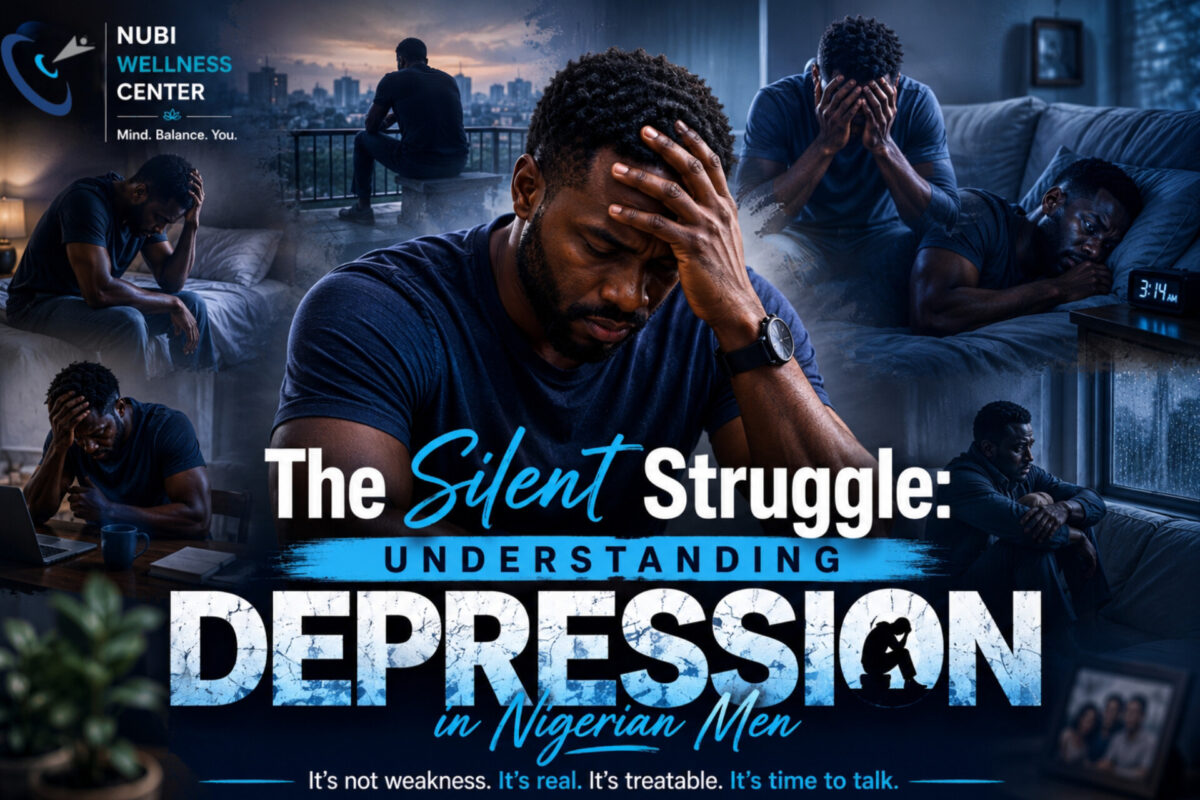
He still goes to work every day. He still laughs at jokes in the family group chat. He still shows up at owambe parties looking sharp in his agbada. From the outside, everything looks fine. But inside, something has gone quiet. The joy is missing. The energy is gone. And he cannot explain why, because nobody ever taught him the words for what he is feeling.
This is depression in Nigerian men. Quiet, hidden, and often mistaken for stress, tiredness, or simply “life.”
What Depression Actually Looks Like in Men
When people picture depression, they often imagine someone crying or staying in bed all day. But depression in Nigerian men rarely looks like that. It hides behind everyday behavior that nobody questions.
It looks like a man who suddenly snaps at small things that never used to bother him. A man who used to be the life of every gathering but now finds reasons to stay home. A man who is always “busy” with work, side hustles, or church activities, not because he loves the hustle, but because sitting still means feeling things he would rather avoid.
It looks like a husband who has grown distant from his wife. A father who feels disconnected from his children but cannot say why. A young graduate who has stopped applying for jobs, not from laziness, but because hope itself feels exhausting.
These are real signs of depression in Nigerian men. They are simply easy to miss because we have never been taught to look for them.
Why Depression Hides So Well in Nigerian Men
There is a simple reason depression goes unnoticed in so many Nigerian men: they were never given permission to feel it out loud.
From childhood, boys hear things like “boys do not cry” and “be a man about it.” By adulthood, those words have become an unspoken rule. So instead of saying “I feel empty” or “I am struggling,” a man says, “I am just tired” or “It is just work stress.”
Add to this the pressure of being the provider. In many Nigerian homes, a man’s worth is tied to what he can give, not how he feels. Admitting depression can feel like admitting failure, and failure is something many men have been taught they cannot afford.
So, the depression stays hidden. Not because it is not there, but because there has never been a safe place to bring it out.
Common Signs of Depression in Nigerian Men
If you are wondering whether you, your husband, your brother, or your friend might be dealing with depression, here are everyday signs to watch for:
- Constant tiredness, even after a full night’s sleep, that does not go away no matter how much rest he gets
- Sudden irritability or anger, snapping at family or coworkers over things that would not normally bother him
- Loss of interest, in things he used to enjoy, like football, music, hanging out with friends, or church activities
- Withdrawing from people, going quiet in the family group chat, avoiding calls, skipping outings he would normally attend
- Changes in appetite or sleep, eating too much or too little, sleeping too much or barely sleeping at all
- Turning to alcohol or substances, as a way to numb the feelings he cannot name
- Feeling like a burden, or saying things like “what is even the point” or “everyone would be better off without me”
If any of this sounds familiar, it does not mean something is wrong with him as a person. It means he may be dealing with depression, and depression is treatable.
Why It Matters That We Talk About This
Depression in Nigerian men does not just affect the man carrying it. It affects the wife who feels shut out of her own marriage. It affects the children who grow up confused by a father who is present but never fully there. It affects friendships that slowly fade because he stopped showing up.
And in the most painful cases, untreated depression leads to outcomes we are too afraid to talk about, including suicidal thoughts and suicide itself. This is not meant to scare you. It is meant to remind you that this conversation is not optional. It is necessary.
The good news is that depression is one of the most treatable mental health conditions when a person gets the right support. Healing is possible. Many men who once felt hopeless have gone on to feel like themselves again.
How Nigerian Men Can Start Healing From Depression
Healing does not have to start with a big dramatic step. It can start small.
- Name what you are feeling. Instead of saying “I am fine,” try being honest with yourself first. You do not have to perform okay-ness for anyone.
- Talk to someone you trust. It does not have to be a long conversation. Even saying “I have not been myself lately” to a friend can open a door.
- Speak to a mental health professional. Therapy is not for “mad people.” It is for anyone who wants to understand what they are feeling and learn how to carry it better.
- Let faith and therapy work together. You can pray and still see a therapist. One does not cancel out the other.
- Give yourself permission to rest. You are not a machine. Needing rest does not make you less of a man.
A Word for the Man Reading This
If you have made it this far, some part of this article probably felt familiar. Maybe it described you. Maybe it described someone you love.
Either way, hear this clearly: you are not broken, you are not weak, and you are not alone. Depression is something that happens to you, not something that defines you. And it can be treated.
You have carried enough in silence. It is okay to put some of it down.
Ready to talk to someone? At Nubi Wellness Center, our mental health professionals in Lagos offer confidential depression therapy and psychiatric support for Nigerian men. You do not have to figure this out alone.
Book a consultation with us today.

You Do Not Have to Carry It Alone
If this post resonated with you, our team at Nubi Wellness Center is here to walk with you through your healing journey. Reach out today, in confidence and without judgment.
Chat With Us on WhatsApp Visit Our Website09070990088 / 07054109566 • Every Story Matters. Every Healing Journey Counts.